
Quality Starts at the Door: Our Produce Quality Control Process for Incoming Raw Produce
At Blanco Creek Farms, our produce quality control process doesn’t begin on the production floor. It begins the moment a truck arrives at our facility.
That first interaction, the unloading, the inspection, the decision to accept or reject, sets the trajectory for everything that follows. If quality slips at the door, no amount of downstream processing can fully correct it. That’s why inbound inspection isn’t treated as a routine step here. It’s treated as a safeguard, a gatekeeper, and one of the most important responsibilities we have.
As we begin a new year, we want to be clear about what drives us: we are uncompromising when it comes to the raw product that enters our system. Saying “no” is not only acceptable, it’s essential to protecting our customers, our processes, and our reputation.
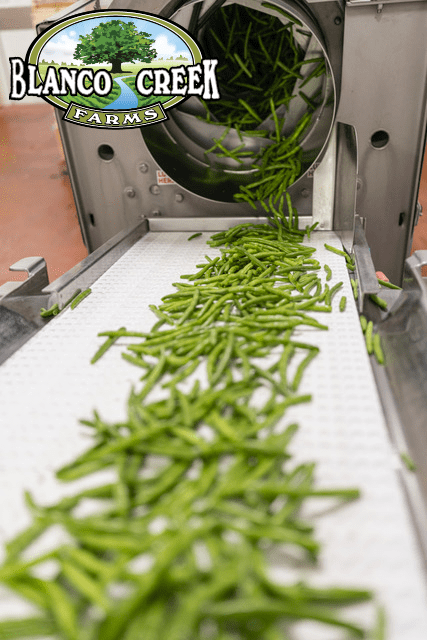 Why the Produce Quality Control Process Starts Before Production
There’s a misconception in food manufacturing that quality can be “built in” later. The reality is simpler and more demanding: quality must arrive intact.
Produce is an agricultural product, and agriculture carries inherent variability. Weather, soil conditions, and harvest timing all introduce factors that no processor can control. What can be controlled, and must be, is what enters the manufacturing environment.
Our produce quality control process is designed to eliminate uncertainty at the earliest possible point. By the time raw produce moves into processing, it has already cleared a defined, documented standard. That discipline is what allows consistency to exist downstream.
What Happens When Raw Produce Arrives
Inbound inspection at Blanco Creek Farms is not a quick visual check or a box to check for compliance. It is a structured, repeatable process carried out by trained personnel who understand both the product and the downstream impact of every decision.
Each inbound load is evaluated against established criteria, including:
- Visual quality: Color, uniformity, and overall appearance
- Physical condition: Bruising, dehydration, breakdown, or mechanical damage
- Foreign material risk: Dirt, debris, or non-produce contaminants
- Handling indicators: Signs of temperature abuse or improper transport
- Specification alignment: Size, grade, cut, or other agreed-upon requirements
The goal is not perfection for its own sake. The goal is predictability, ensuring the product will perform consistently through processing and meet customer expectations at the end of the line.
The Role of Documentation in Quality Control
A produce quality control process is only as strong as its documentation. Without records, quality decisions become subjective. With documentation, they become defensible, repeatable, and improvable.
Every inbound inspection is recorded. Acceptance, conditional acceptance, and rejection decisions are documented with clear reasoning. This creates:
- Accountability across teams
- Traceability for food safety and compliance
- Historical insight that allows trends to be identified and addressed
Over time, this data becomes one of our most valuable tools. It helps us spot patterns, refine standards, and engage in meaningful, fact-based conversations with partners when issues arise.
Rejection Is a Quality Tool, Not a Failure
Rejecting inbound product is never taken lightly. We understand the effort, coordination, and cost involved in growing and shipping produce. But we also understand the consequences of allowing substandard material into the system.
We reject raw produce when it:
- Falls outside defined quality specifications
- Poses a potential food safety risk
- Shows signs of deterioration that will worsen during processing
- Threatens consistency for our customers
These decisions are not punitive. They are protective.
Allowing compromised product to move forward creates downstream disruptions, inconsistent output, and increased risk for everyone involved. Saying “no” early prevents far more serious issues later.
In our view, rejection is one of the clearest signals that a produce quality control process is working as intended.
Manufacturing Control Is Where Consistency Is Built
While growing practices matter, manufacturing is where consistency is created – or lost.
At Blanco Creek Farms, we don’t attempt to control variables that are inherently outside our reach. What we do control, with precision, is how raw produce is evaluated, processed, and verified once it reaches us.
Our produce quality control process ensures that:
- Inputs meet defined standards before processing begins
- Variability is reduced before it impacts production
- Finished products behave predictably across batches
This discipline allows us to deliver reliable outcomes to customers who depend on uniformity, not surprises.
Working With Grower Partners Through Clear Standards
Rigor does not require conflict. We value our grower partners and view strong relationships as essential to long-term success.
Clear inbound standards and thorough documentation allow conversations to be constructive rather than reactive. When issues arise, we can focus on facts:
- Was this a one-time deviation or part of a trend?
- What changed?
- What adjustments can prevent recurrence?
This feedback loop strengthens the supply chain over time. It aligns expectations and supports improvement without compromising standards.
Protecting Customers Through Process Discipline
Our customers, whether in retail, food service, or further manufacturing, depend on us for reliability. They expect products that meet specification, perform consistently, and arrive without hidden risk.
A disciplined produce quality control process protects those expectations. It reduces variability, minimizes downstream disruptions, and supports food safety at every level.
Most importantly, it allows our customers to focus on their own operations, confident that the product they receive has already passed through a rigorous gate.
Setting the Standard for the Year Ahead
January is a natural moment to reaffirm priorities. For us, that priority is clear: quality begins at the door.
Every inbound decision reflects our commitment to process, accountability, and consistency. It’s not the most visible part of our operation, but it may be the most important.
As we move through the year, we’ll continue to share how disciplined manufacturing processes protect our customers and strengthen the supply chain. Because at Blanco Creek Farms, quality isn’t a slogan. It’s a system, and it starts the moment raw produce arrives.