
Produce Quality Standards: Why Rejecting Product Protects Customers
Rejecting Product Is a Feature, Not a Failure
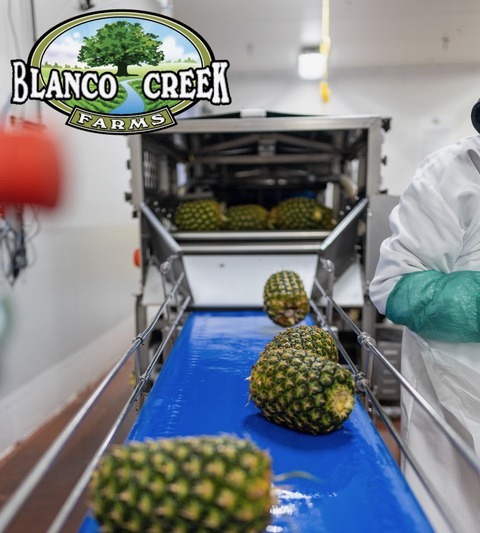 At Blanco Creek Farms, produce quality standards are not just part of our messaging. They are part of our operating philosophy. They shape what we accept, what we reject, and what we are willing to stand behind when product leaves our facility and moves into the hands of our customers.
That matters because quality does not begin when a finished product is packed and ready to ship. It begins much earlier, at the point where raw materials are evaluated against the standards that define the rest of the process. If those standards are weak, inconsistent, or easy to bend when things get inconvenient, the consequences do not stay contained at the dock. They move downstream. They affect yields, consistency, shelf life, customer confidence, and brand reputation.
That is why we reject product that does not meet our standards.
We do not see rejection as a sign that something has gone wrong inside our process. We see it as evidence that the process is doing exactly what it is supposed to do. Strong produce quality standards are not proven when everything is easy. They are proven when a load arrives that is close, but not close enough, and the team still has the discipline to say no.
That kind of decision is not weakness. It is not failure. It is not unnecessary friction. It is a quality control feature that protects the integrity of the product, the consistency of the operation, and the trust our customers place in us.
Why produce quality standards matter at the raw material stage
There is a tendency in food and produce supply chains to treat raw material acceptance as a preliminary step, something that happens before the real work begins. We do not see it that way. We see it as one of the most important control points in the entire process.
Raw materials set the starting point for everything that follows. If a raw material is strong, clean, and aligned with specification, the rest of the manufacturing process has a fair chance to do its job well. If a raw material is compromised, inconsistent, or outside standard, every downstream step becomes harder. The line has to work around problems it should never have inherited. Quality teams have to monitor more aggressively. Product performance becomes less predictable. Customers absorb risk they never agreed to take on.
That is why produce quality standards cannot begin at the end. They have to begin at the front door.
When a company is serious about quality, it does not simply hope the process will fix weak inputs. It does not accept questionable product and rely on optimism. It uses clear standards to determine what is suitable for production and what is not. That is not rigid for the sake of being rigid. It is responsible manufacturing.
Quality is defined by what you refuse
Anyone can talk about quality when the load is clean, uniform, and easy to accept. The real test comes when the situation gets uncomfortable.
Maybe a shipment is not terrible, but it is trending below standard. Maybe it has enough issues that the team knows it will create downstream inconsistency. Maybe it falls short of what was agreed to, but rejecting it will create scheduling pressure or a difficult conversation. Those are the moments where produce quality standards become real.
A business that only applies standards when it is convenient does not really have standards. It has preferences.
At Blanco Creek Farms, we believe produce quality standards only mean something if they hold under pressure. They have to be strong enough to survive a tight schedule, a frustrating decision, or a short-term inconvenience. Otherwise, they are not standards at all. They are suggestions.
That is why we are unapologetic about rejecting substandard raw materials. If a raw input does not meet the level of quality we believe our customers deserve, it does not belong in the system. Allowing it through would not make us flexible. It would make us careless.
The hidden cost of accepting the wrong product
Too often, the conversation about rejection focuses only on the short-term cost.
People think about delays. They think about supplier frustration. They think about operational disruption. They think about the hassle of saying no. Those concerns are real, but they are incomplete. The larger cost often comes from accepting the wrong product and forcing the rest of the operation, and eventually the customer, to carry the burden.
When substandard raw material enters production, the problem does not disappear. It spreads.
It can affect consistency. It can reduce predictability. It can create uneven outcomes from batch to batch. It can shorten the usable life of the finished product. It can increase waste. It can force downstream customers to deal with product that does not perform the way they expected. It can create questions that should never have had to be asked in the first place.
That is the trap of weak produce quality standards. They make things seem easier in the moment while quietly increasing the cost everywhere else.
Strong produce quality standards do the opposite. They force the hard decision early, while the problem is still controllable. They stop risk from moving further down the chain. They protect the rest of the process from becoming a cleanup operation.
From our perspective, that is not just good manufacturing. It is good business.
Rejecting product protects brand integrity
Brand integrity is not built through polished messaging alone. It is built through operational discipline.
If a company says it cares about quality, then quality has to show up in the decisions it makes when the answer is inconvenient. If a company says consistency matters, then it cannot quietly lower the bar at receiving and expect the brand promise to remain intact. If a company says customers can trust it, then it has to make decisions that protect that trust even when those decisions are expensive in the short term.
That is where produce quality standards become more than a quality assurance concept. They become a brand protection strategy.
Every accepted load says something about what a company is willing to stand behind. Every rejected load says something too. It says the company has a line. It says the company is not interested in pushing avoidable risk onto customers. It says the brand promise is connected to real behavior.
At Blanco Creek Farms, we take that seriously because our customers are not just buying a product. They are buying confidence in the system behind it. They want to know that what reaches them has passed through an operation that is disciplined enough to stop problems early. They want to know that the standards on paper are the same standards being enforced in practice.
That is why rejecting substandard product protects more than an individual shipment. It protects the reputation attached to every shipment that follows.
Downstream customers should not pay for upstream compromise
One of the clearest reasons produce quality standards matter is that the cost of compromise rarely stays where it starts.
A weak decision at receiving becomes someone else’s problem later.
It may become a headache for production. It may become a quality control concern. It may become a shelf-life issue. It may become a customer complaint. It may become lost confidence from a buyer who was counting on consistency and did not get it. In the worst cases, it can become a reason that future business never materializes.
That is why we reject the idea that acceptance is always the safer or more collaborative choice. Sometimes acceptance is simply a way of transferring risk. It moves the cost from the point where it could have been contained to the point where it becomes harder, messier, and more expensive to manage.
Downstream customers deserve better than that.
They deserve a partner that understands its role in protecting the chain, not just moving product through it. They deserve produce quality standards that are enforced before weak inputs can become bigger liabilities. They deserve an operation that sees quality as a responsibility, not a talking point.
That is the approach we believe in. Protect the downstream customer by making the right upstream decision, even when that decision is not the easy one.
Good standards improve the whole supply chain
Rejecting product is not only about defense. It is also about improvement.
Every rejection creates information. It reveals where expectations were missed. It shows where communication may need to be tightened. It highlights recurring issues that deserve more attention. It gives both processor and supplier a clearer picture of where performance needs to improve.
In that way, strong produce quality standards make the entire supply chain better over time.
They encourage clarity. They reduce ambiguity. They help suppliers understand what acceptable really means in practice. They create a feedback loop that is grounded in performance rather than guesswork. They support more productive conversations because the standards are visible and the outcomes are documented.
A system that never rejects anything is usually not a sign of perfection. More often, it is a sign that the standards are too loose, too unclear, or too inconsistently enforced to be meaningful. That does not create harmony. It creates blind spots.
We would rather operate with clarity.
When raw materials do not meet the mark, we want to know it. We want to address it. We want to improve from it. That is how disciplined operations get stronger. That is how supplier relationships mature. That is how customers benefit from a more reliable system.
Produce quality standards must hold under pressure
It is easy to claim standards when supply is strong and the schedule is loose. It is much harder when rejecting product creates operational pressure.
That is exactly when standards matter most.
A rushed week does not make poor raw material less risky. A tight production window does not make inconsistency less expensive. A difficult conversation with a supplier does not make downstream customer needs less important. Pressure changes the mood of the moment, but it does not change the reality of the product.
That is why our produce quality standards are not meant to be situational. They are meant to be durable.
We believe the right standard is the one you still enforce when saying no is frustrating. That is where credibility comes from. That is where trust is earned. That is how customers learn that your quality culture is real.
This is one of the biggest differences between companies that talk about quality and companies that build around it. The first group treats standards as branding. The second group treats standards as operating discipline.
We know which kind of company we want to be.
What smart buyers should look for
Potential customers should ask more from a produce processor than broad promises about quality.
They should ask whether the company has clear produce quality standards for incoming raw materials. They should ask how those standards are enforced. They should ask what happens when product misses the mark. They should ask whether rejection is treated as an exception, or as a necessary part of protecting the final result.
Those questions matter because buyers are not just selecting a vendor. They are selecting a system of judgment.
They are choosing whether they want to work with a processor that filters risk early or one that lets risk travel downstream.
They are choosing whether standards are real, documented, and operational, or mostly aspirational. They are choosing whether the company on the other side of the relationship understands that consistency is not accidental.
In a crowded marketplace, that distinction matters. It matters for procurement. It matters for product performance. It matters for brand trust. It matters for long-term partnership.
The processors worth trusting are the ones who understand that rejecting the wrong product is part of delivering the right one.
The standard we believe in
At Blanco Creek Farms, we believe produce quality standards should be clear, enforced, and visible in the decisions a company makes every day.
We believe quality starts before production, not after problems appear.
We believe downstream customers should not have to absorb the consequences of weak upstream judgment.
We believe brand integrity is protected by discipline, not by spin.
And we believe rejecting substandard raw materials is one of the strongest signs that a processor takes its responsibilities seriously.
That is why we do not apologize for saying no when the product does not meet the standard. We see that decision for what it is: a safeguard for consistency, a protection for customers, and a signal that quality is not negotiable.
Rejecting product is not a failure. It is one of the clearest features of a business built on real produce quality standards.
Looking for a produce processing partner with real standards, not just good marketing? Contact Blanco Creek Farms to learn how our quality-first approach helps protect your brand, your customers, and your supply chain.